
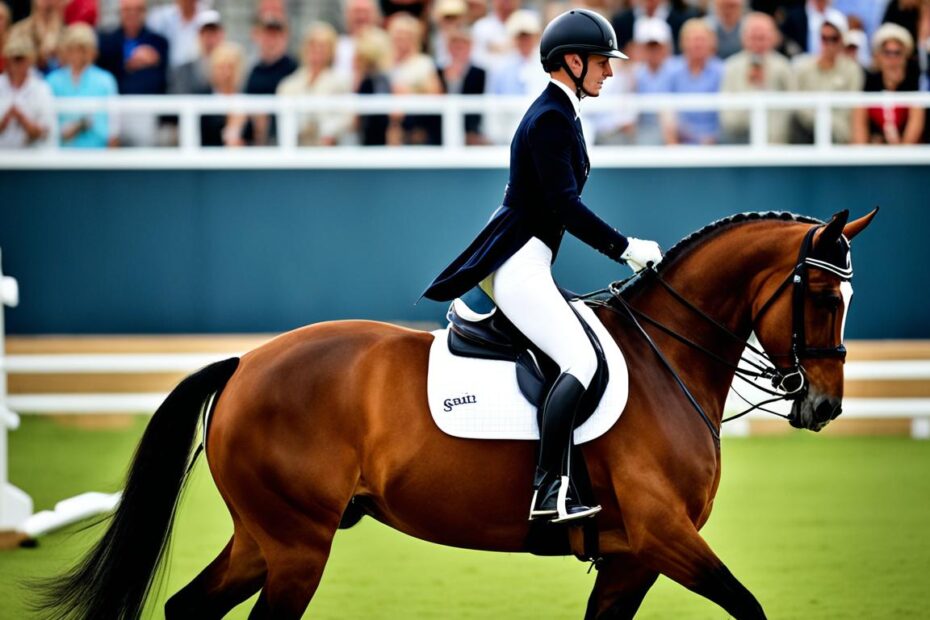
Embarking on your first dressage competition can be an exciting, yet daunting experience. As a new competitor, you may have questions about the structure of the event, the judging criteria, and the necessary preparations.
This comprehensive guide will provide you with a clear understanding of what to expect at your first Dressage Competitions, helping you feel confident and ready to take on the challenge.
Key Takeaways
- Gain a thorough understanding of the various levels of Dressage Events and what to expect at each level.
- Learn about the essential Equine Tack and grooming requirements for Dressage Competitions.
- Discover effective Mental Preparation Techniques to manage nerves and stay focused during the competition.
- Explore the role of Dressage Judges and how they evaluate the horse and rider’s performance.
- Familiarize yourself with the rules and regulations governing Horse Shows and Equestrian Events.
Understanding Dressage Competitions
Dressage is a captivating equestrian discipline that showcases the harmonious partnership between horse and rider. At its core, dressage emphasizes the development of a horse’s natural athletic abilities through a systematic training process, creating a graceful and controlled performance in the dressage arena.
What is Dressage?
Dressage is often referred to as the “ballet of the horse world.” It is a specialized form of equestrian competition that challenges riders to demonstrate their horse’s obedience, flexibility, and responsiveness to subtle aids.
Riders must seamlessly guide their horses through a series of predetermined movements and patterns, all while maintaining a calm, collected, and elegant demeanor.
Different Levels of Dressage Events
Dressage competitions are structured in a progressive manner, allowing riders and horses to advance through various levels of difficulty. The levels include:
- Introductory – Entry-level dressage tests that focus on basic movements and gaits.
- Training – Builds upon the Introductory level, introducing more complex maneuvers.
- First – Riders and horses demonstrate increased control and precision in their performances.
- Second – Movements become more challenging, with an emphasis on collection and self-carriage.
- Third – Highly skilled riders and horses showcase advanced lateral work and changes of lead.
- Fourth – The highest level before the elite Grand Prix, featuring the most demanding dressage tests.
- Grand Prix – The pinnacle of dressage, showcasing the ultimate in horse and rider harmony, power, and elegance.
As competitors progress through the levels, they face increasingly complex Dressage Tests and Dressage Arenas, making the sport a true test of a rider’s skills and their horse’s training.
Preparing for Your First Dressage Competition
Embarking on your first Horse Shows or Equestrian Events can be both exhilarating and daunting. To ensure a successful debut in the world of Horse Training, proper preparation is key. Here are some essential tips to help you get ready for your first dressage competition:
- Intensify your horse’s training regimen. Dedicate extra time to refining your horse’s movements, responsiveness, and overall performance. Work closely with your trainer to address any areas that need improvement.
- Invest in high-quality Horse Shows attire and tack. Ensure your horse’s Equestrian Events equipment is in top condition and fits correctly. This includes saddles, bridles, and any necessary protective gear.
- Familiarize yourself with the competition venue. If possible, visit the show grounds ahead of time to get a feel for the environment and the dressage arena. This will help you and your horse feel more comfortable on the day of the event.
- Practice your test routines thoroughly. Run through the required movements and patterns multiple times to build confidence and muscle memory. Pay close attention to the details and technicalities of each element.
- Incorporate mental preparation techniques. Visualize yourself and your horse performing at your best, and engage in relaxation exercises to manage any pre-competition jitters.
By following these steps, you’ll be well on your way to a successful and enjoyable first dressage competition. Remember, the key is to approach it with a positive mindset and a dedication to continuous improvement in Horse Training.
Dressage Competitions: What to Expect
As you prepare to compete in your first dressage event, it’s important to understand the key elements that make up the competition environment. Two crucial aspects to familiarize yourself with are the dressage arena and the dressage tests and movements you’ll be required to perform.
The Dressage Arena
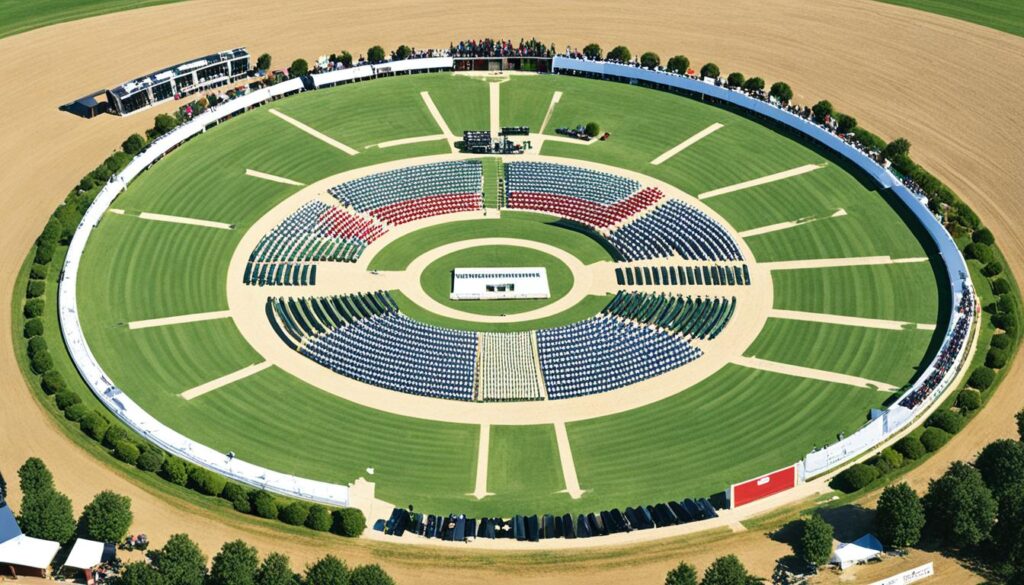
Dressage competitions take place in a standardized arena, typically measuring 20 meters wide by 60 meters long. The arena is enclosed by a low fence or markers, and it is divided into distinct areas where specific Dressage Movements must be executed.
Riders must navigate the arena precisely, maintaining control and rhythm as they transition between these designated areas.
Dressage Tests and Movements
At the heart of a dressage competition are the Dressage Tests, which outline the specific Dressage Movements that riders must perform. These tests vary in difficulty and complexity based on the competition level, ranging from introductory-level tests for beginners to more advanced tests for experienced competitors.
- Common Dressage Movements include:
- Straight lines
- Circles
- Transitions between gaits
- Lateral movements (such as shoulder-in and haunches-in)
- Changes of lead
- Riders must execute these movements with precision, grace, and control, demonstrating their horse’s training and responsiveness.
Understanding the layout of the Dressage Arena and the specific Dressage Tests and Dressage Movements required will help you feel more prepared and confident as you step into the competition arena.
Equipping Your Horse for Dressage Events
Preparing your horse for a dressage competition involves more than just training the movements. Proper Equine Tack and equipment, as well as meticulous Horse Grooming and Horse Preparation, are essential to ensuring your horse looks and performs its best on the big day.
Proper Tack and Equipment
The tack used in dressage competitions must adhere to strict regulations. Riders should ensure their Equine Tack includes a legal dressage saddle, bit, and bridle. These items should fit the horse comfortably and allow for freedom of movement.
Riders should also consider wearing appropriate show attire, such as a coat, breeches, and riding boots, to complete the polished dressage look.
Grooming and Turnout
Meticulous Horse Grooming and Horse Preparation are crucial for dressage competitions. Horses should be thoroughly brushed, their manes and tails neatly braided, and their coats shined to a gleam. Hooves should be clean and well-trimmed, and any leg wraps or bandages should be pristine. Attention to these details can make a significant difference in how your horse is perceived by the judges.
By properly equipping your horse and ensuring it looks its best, you can set the stage for a successful dressage performance and impress the judges with your attention to detail.
Warming Up for a Dressage Competition
Preparing your horse for a dressage competition is crucial to ensure a successful performance. The warm-up phase is an essential part of this process, allowing your horse to become relaxed, supple, and mentally focused before entering the arena. Let’s explore some key tips to help you and your equine partner warm up effectively.
One of the primary goals during the warm-up is to slowly and gently engage your horse’s muscles and joints. Begin with a long, loose walk, allowing your horse to stretch and loosen up. This helps increase blood flow and prepare the body for more intense work.
- After the initial walk, gradually increase the pace to a steady trot, focusing on maintaining a consistent rhythm and suppleness throughout the body.
- Incorporate gentle transitions between gaits, such as trot-walk-trot, to help your horse become more responsive and balanced.
- Once your horse is warmed up, you can introduce more specific dressage movements, such as circles, serpentines, and leg-yields, to further prepare them for the competition test.
Throughout the warm-up, pay close attention to your horse’s mental state as well. Encourage relaxation and focus by maintaining a calm, confident demeanor and providing gentle, reassuring cues. This will help your horse feel more confident and ready to perform their best during the competition.
Remember, the warm-up is not just about physical preparation; it’s also about connecting with your horse and ensuring they are mentally and emotionally ready to tackle the challenges of the Equestrian Events.
By following these guidelines, you can help your horse approach the dressage competition with the poise and confidence needed for a successful performance.
The Role of Dressage Judges
At the heart of any dressage competition lies the expert evaluation of Dressage Judges. These highly skilled individuals play a crucial role in assessing the performance of horse-and-rider combinations, ensuring fairness and upholding the standards of the sport.
Understanding Dressage Scoring
Dressage Scoring is a complex and nuanced process, with Dressage Judges carefully analyzing every aspect of the rider’s execution of the test movements. Riders are scored on a scale of 0 to 10, with 10 representing a perfectly executed movement and 0 indicating a movement that was not performed at all.
The judges’ scores are then combined to determine the overall result, with the highest-scoring combination emerging victorious.
The Dressage Judges evaluate a wide range of criteria, including the horse’s gaits, impulsion, submission, and responsiveness to the rider’s aids. They also assess the rider’s position, effectiveness, and harmony with the horse. By considering these factors, the Dressage Judges ensure that the competition rewards the true mastery of the sport of dressage.
The role of Dressage Judges is not to be taken lightly. They must possess a deep understanding of dressage principles, a keen eye for detail, and the ability to make objective and fair assessments under the pressure of competition.
Their expertise and dedication are essential in upholding the integrity of dressage competitions and inspiring the next generation of equestrian athletes.
Navigating Competition Rules and Regulations
Participating in equestrian events requires a thorough understanding of the applicable competition rules. As a dressage competitor, it’s crucial to familiarize yourself with the specific regulations governing your chosen discipline.
Dress code is an important aspect of dressage competitions. Adhering to the appropriate attire, such as a white shirt, black or navy jacket, and black boots, ensures you present a professional and polished appearance in the arena.
Additionally, the use of proper tack and equipment, as outlined in the competition guidelines, is mandatory for your horse’s safety and well-being.
- Familiarize yourself with the dress code requirements for your competition.
- Ensure your horse’s tack and equipment meet the specified standards.
- Review the arena etiquette and protocols to avoid any missteps during your test.
- Understand any unique competition requirements, such as musical freestyle or pas de deux classes.
By diligently studying the competition rules, you’ll be well-prepared to navigate the challenges of dressage events and showcase your skills with confidence.
Remember, attention to detail and adherence to the rules are essential for a successful dressage competition experience. Embrace the opportunity to demonstrate your commitment to the sport and your horse’s well-being.
Managing Nerves and Staying Focused
Competing in equestrian events like Horse Shows can be an exhilarating experience, but it’s also natural to feel a bit of pre-competition jitters.
However, with the right mental preparation techniques, you can learn to manage your nerves and stay focused during your dressage performance.
Mental Preparation Techniques
Successful dressage competitors often employ a variety of mental preparation strategies to help them perform at their best. Some effective techniques include:
- Visualization: Spend time visualizing yourself executing each movement of your dressage test with precision and confidence. Mentally rehearse the entire performance from start to finish.
- Positive Self-Talk: Replace any negative or self-doubting thoughts with encouraging, affirmative statements. Remind yourself of your training, skills, and the progress you’ve made.
- Controlled Breathing: Take a few deep, slow breaths before entering the arena to help calm your mind and body. Maintaining steady, rhythmic breathing can also assist you in staying focused during your performance.
- Mindfulness: Practice being fully present in the moment, focusing on the task at hand rather than worrying about the outcome. This can help you stay centered and avoid getting distracted by external factors.
By incorporating these mental preparation techniques into your pre-competition routine, you can learn to manage your nerves and perform with greater focus and confidence during your Equestrian Events.
Post-Competition Evaluation and Improvement
After the excitement of your first dressage competition, it’s crucial to take time to reflect on your performance and identify areas for growth. Reviewing the judges’ feedback and evaluating your own performance can provide invaluable insights that will help you and your horse become even stronger competitors in future equestrian events.
During the post-competition evaluation, focus on both the positive aspects of your performance as well as the areas that need refinement. Analyze the specific dressage movements and transitions where you excelled, as well as those that could use more practice.
This honest assessment will guide your training and preparation for the next competition, ensuring you continue to progress in the sport of Equestrian Events.
Remember, the journey of mastering Horse Training is a continuous one. By embracing the feedback from judges and your own self-reflection, you can develop a tailored training plan that addresses your unique needs and helps you achieve your goals in the dressage arena.
With dedication and a commitment to continuous improvement, you’ll be well on your way to becoming an even stronger competitor in future dressage events.
FAQ
What is dressage and how is it different from other equestrian disciplines?
Dressage is a unique equestrian discipline that focuses on the harmonious partnership between horse and rider. It emphasizes the horse’s natural gaits, balance, and obedience, as well as the rider’s ability to communicate with the horse through subtle cues and aids.
Unlike other disciplines like jumping or racing, dressage is all about precision, control, and the development of the horse’s natural athleticism.
What are the different levels of dressage competitions?
Dressage competitions are organized into various levels, ranging from introductory tests for beginners to the highest level of Grand Prix for elite horse-and-rider combinations. The progression through the levels allows riders to gradually build their skills and challenge themselves as they and their horses progress in their training.
How do I prepare my horse for a dressage competition?
Proper preparation is key for a successful dressage competition. This includes consistent training to develop your horse’s obedience, suppleness, and collection, as well as thorough grooming and ensuring your horse has the right tack and equipment. It’s also important to practice your dressage tests and warm up your horse thoroughly before entering the arena.
What can I expect in the dressage arena?
The dressage arena is a rectangular space with specific dimensions and letters placed around the perimeter. Riders must perform a series of movements and figures within the arena, following a predetermined dressage test. Judges will observe the horse and rider’s performance, evaluating the accuracy, flow, and quality of the movements.
How is a dressage horse’s performance evaluated and scored?
Dressage judges use a scoring system to evaluate the horse and rider’s performance, with marks ranging from 0 to 10. Judges assess criteria such as the horse’s gaits, impulsion, submission, and the rider’s effectiveness in communicating with the horse. The scores and comments from the judges provide valuable feedback for improving the partnership.
What are the key rules and regulations I need to be aware of for a dressage competition?
Dressage competitions have specific rules and regulations that competitors must follow, such as proper attire, tack requirements, and arena etiquette. It’s important to familiarize yourself with these rules to ensure a smooth and successful competition experience.

I’m Fredson Smith, a dedicated researcher at Dincards, passionate about exploring and sharing the diverse world of equines with our readers.