
Equestrian eventing, also known as the three-day event, is a thrilling and demanding equestrian discipline that combines the grace of dressage, the speed and agility of cross-country, and the precision of show jumping.
This comprehensive guide delves into the captivating world of eventing, exploring its rich history, the unique challenges faced by horse and rider, and the intricacies of the three distinct phases that make up this Olympic equestrian sport.
Key Takeaways
- Equestrian eventing is a multi-disciplinary equestrian sport that consists of three phases: dressage, cross-country, and show jumping.
- The sport has a long and storied history, tracing its roots back to the 19th century and the military training of cavalry officers.
- Eventing competitions at the Olympic level are among the most prestigious and challenging events in the equestrian world.
- Riders and horses must demonstrate a diverse range of skills, including strength, agility, and precise control, to succeed in the three distinct phases of eventing.
- Scoring and penalties are crucial in eventing, with judges evaluating every aspect of the horse and rider’s performance across the three phases.
What is Equestrian Eventing?
Equestrian eventing, also known as the three-day event, is a captivating Equestrian Discipline that tests the skills and abilities of both horse and rider.
This unique Equestrian Discipline combines three distinct phases – dressage, cross-country, and show jumping – into a thrilling Eventing Competition that showcases the versatility and athleticism of the partnership between horse and rider.
An Overview of the Sport
Equestrian Eventing is a multi-faceted Equestrian Discipline that challenges horse and rider to excel in a variety of equestrian skills. Competitors must navigate through a series of challenges, including:
- Dressage: A test of the horse’s obedience, suppleness, and responsiveness to the rider’s aids.
- Cross-Country: An intense test of speed, stamina, and jumping ability as horse and rider navigate a challenging course of fixed obstacles.
- Show Jumping: A test of the horse’s technique, agility, and power as they jump a series of obstacles in a show jumping arena.
History and Origins
The roots of Equestrian Eventing can be traced back to the military cavalry training exercises of the 19th century. These early Horse Trials were designed to test the versatility and fitness of cavalry horses and their riders, as they prepared for the demands of military service.
Over time, Equestrian Eventing evolved into a civilian sport, with the first modern three-day event held at the 1912 Stockholm Olympics.
Today, Equestrian Eventing is a highly prestigious Equestrian Discipline, with top-level competitions held around the world, including the prestigious Eventing Competitions at the Olympic Games. The sport continues to captivate audiences with its blend of skill, athleticism, and the unique partnership between horse and rider.
The Three Phases of Eventing
Equestrian eventing, a captivating and multifaceted sport, is composed of three distinct phases that challenge riders and their equine partners to the fullest. These phases include Dressage Tests, Cross-Country Courses, and Show Jumping Competitions.
The first phase, Dressage Tests, tests the horse and rider’s harmony, precision, and elegance. Competitors must execute a series of predetermined movements and patterns, showcasing the horse’s obedience, responsiveness, and the rider’s ability to communicate with subtle aids.
The second phase, Cross-Country Courses, is the ultimate test of courage, athleticism, and skill. Riders navigate a challenging course filled with various obstacles, such as jumps, water hazards, and terrain changes, while maintaining a steady pace and optimizing their horse’s stamina.
The final phase, Show Jumping Competitions, tests the horse and rider’s ability to navigate a course of elevated jumps with precision and control. Competitors must demonstrate their horse’s scope, agility, and the rider’s ability to guide their mount through a series of technical maneuvers.
Successful Eventing Competitions require a well-rounded skill set, as each phase poses unique challenges that must be mastered to achieve a top-ranking performance. The combination of these three phases makes equestrian eventing a thrilling and demanding sport that captivates both competitors and spectators alike.
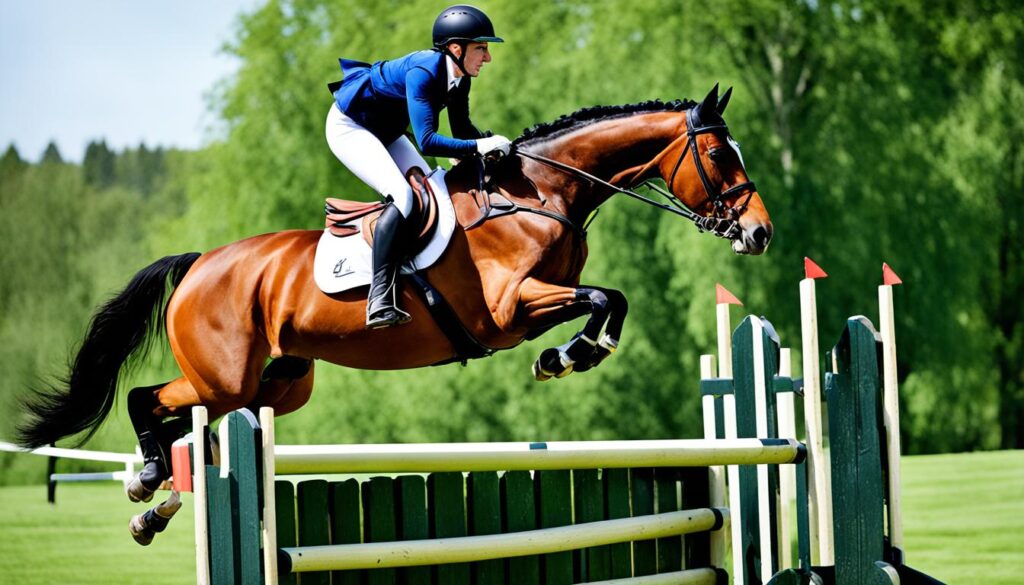
Dressage: The First Phase
Equestrian eventing, a captivating and multifaceted sport, begins with the captivating dressage phase. This initial test showcases the harmonious partnership between the horse and rider, as they demonstrate precision, control, and obedience through a series of predetermined movements and exercises.
Understanding the intricacies of dressage tests is crucial to navigating the world of Equestrian Eventing.
Understanding Dressage Tests
Dressage tests in Equestrian Eventing are designed to assess the horse and rider’s ability to execute a variety of movements with grace, fluidity, and accuracy. These tests evaluate the horse’s Dressage Tests, including but not limited to, the walk, trot, and canter, as well as their responsiveness to the rider’s aids.
The rider’s Equestrian Disciplines are also assessed, from their position and balance to their subtle communication with the horse.
Each dressage test is unique, with specific patterns and movements that the horse and rider must perform. Competitors are judged on their ability to execute these elements with precision and elegance, earning points that contribute to their overall Equestrian Eventing score.
Mastering the dressage phase requires extensive training and practice, as both the horse and rider must develop a deep understanding of their partnership and the nuances of the discipline. By honing their skills in this initial phase, competitors can set the foundation for a successful Equestrian Eventing journey.
Cross-Country: The Ultimate Test
The cross-country phase of Equestrian Eventing is considered the most challenging and thrilling component of the sport. Riders and their equine partners must navigate a demanding course filled with various obstacles, diverse terrain, and natural hazards, testing their courage, athleticism, and problem-solving skills.
This phase of the competition requires both horse and rider to demonstrate their versatility, endurance, and ability to adapt to the ever-changing environment. Riders must guide their horses through a series of Cross-Country Courses that may include:
- Steep hills and valleys
- Water crossings
- Solid fences
- Brush-covered obstacles
- Ditches and banks
The Equestrian Eventing cross-country course is designed to challenge the horse and rider combination, testing their partnership, communication, and decision-making skills. Riders must navigate the course at a galloping pace while maintaining control and balance, all while ensuring the safety and well-being of their horse.
Successful completion of the Equestrian Disciplines cross-country phase requires a deep understanding of the horse’s capabilities, as well as the rider’s ability to make quick and informed decisions in response to the ever-changing terrain and obstacles. This phase separates the true masters of the sport from the rest, making it a true test of equestrian excellence.
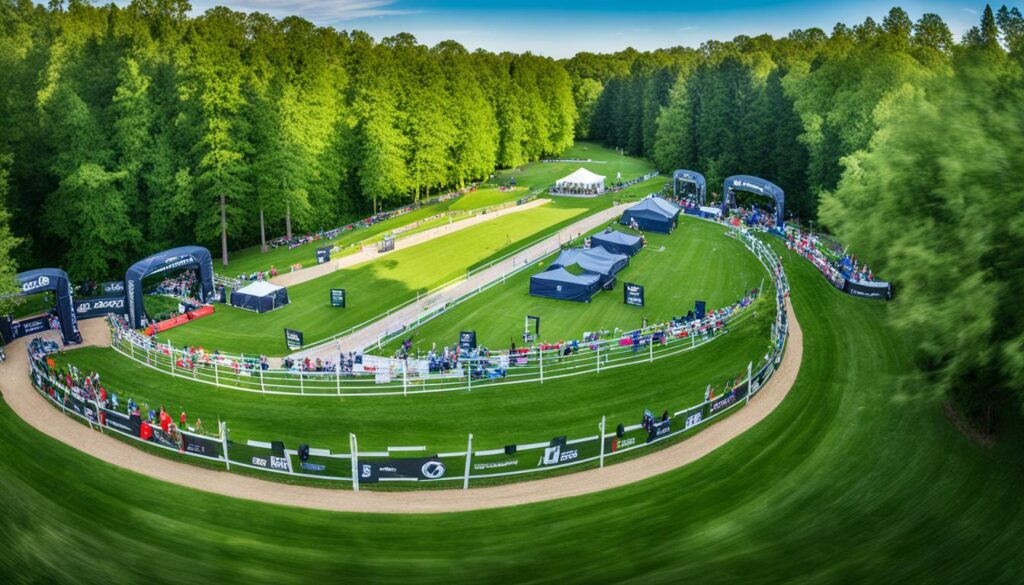
Equestrian Eventing Explained: Show Jumping Phase
The final phase of equestrian eventing, the show jumping competition, challenges horse and rider to demonstrate their agility, precision, and ability to navigate a course of obstacles at high speeds. This thrilling finale tests the partnership’s skill and determination as they strive to secure a top position in the overall event.
Navigating Show Jumping Competitions
Show jumping competitions in equestrian eventing require riders to guide their horses through a carefully designed course, clearing a series of fixed obstacles within a set time limit. Attention to detail and quick decision-making are critical, as the slightest misstep can result in costly penalties that can impact the final standings.
- Precision is key: Riders must navigate the course with pinpoint accuracy, guiding their horses to leap over obstacles with perfect form.
- Timing is everything: The race against the clock demands that riders and their horses maintain a steady, controlled pace throughout the course.
- Staying calm under pressure: Remaining focused and composed is essential, as even the slightest hesitation or loss of concentration can lead to costly mistakes.
Mastering the show jumping phase of equestrian eventing requires a unique blend of skill, strategy, and the ability to work in perfect harmony with one’s equine partner. The combination of speed, agility, and flawless execution makes this final stage of the competition a thrilling and captivating spectacle for both participants and spectators alike.
Scoring and Penalties
Equestrian eventing competitions are a complex and nuanced affair, with a sophisticated scoring system that determines the winners. The judging process encompasses all three phases of the event – dressage, cross-country, and show jumping – evaluating both the horse and rider’s performance to arrive at a final score.
Dressage Scoring
In the dressage phase, riders are assessed on their ability to execute a series of predetermined movements with precision and grace. Judges award points based on factors such as the horse’s responsiveness, the rider’s position, and the overall harmony between the two. Penalties can be incurred for errors or deviations from the test.
Cross-Country Penalties
The cross-country phase is all about speed, accuracy, and overcoming obstacles. Riders are penalized for exceeding the optimum time, as well as for any refusals, run-outs, or falls at the obstacles. The more severe the infraction, the higher the penalty points.
Show Jumping Scoring
In the final show jumping phase, riders must navigate a course of fences without knocking any down. Points are deducted for each fence that is dislodged, and additional penalties can be incurred for exceeding the time allowed or for other errors.
The cumulative scores from all three phases determine the final standings in an Eventing Competitions. Riders with the lowest total penalties are awarded the top placings, with the ultimate goal being to minimize penalties and maximize their performance across the diverse challenges of Equestrian Eventing.
By understanding the intricacies of the Scoring and Penalties system, equestrian enthusiasts can gain a deeper appreciation for the skill and precision required to excel in the dynamic sport of Eventing Competitions.
Training and Preparation
Successful participation in equestrian eventing requires extensive training and preparation for both the horse and rider. The demanding nature of the three-day events necessitates a comprehensive approach to conditioning and training.
Conditioning for Three-Day Events
Proper conditioning is crucial for the equestrian eventing athlete. Riders must focus on developing their own physical fitness, improving their strength, endurance, and balance. This can be achieved through a variety of exercises, including:
- Cardiovascular training to build endurance
- Strength training to increase muscle power
- Flexibility and mobility exercises to enhance range of motion
Equally important is the conditioning of the horse. Trainers must design a regimen that gradually builds the horse’s fitness, stamina, and agility. This may include:
- Varied terrain and obstacle training to simulate the challenges of the cross-country phase
- Lunging and long-reining exercises to improve balance and coordination
- Dressage work to refine the horse’s responsiveness and obedience
By prioritizing the physical and mental preparation of both horse and rider, equestrian eventing athletes can enhance their chances of success in these demanding three-day events.
Eventing at the Olympic Level
Equestrian eventing has long been a staple of the Olympic Games, showcasing the remarkable athleticism and skill of both horse and rider. This prestigious discipline has a rich history, with its origins dating back to the early days of the modern Olympic movement.
Today, eventing continues to captivate audiences worldwide, as elite riders from across the globe converge to compete on the world’s biggest stage.
The Olympic eventing competition is a testament to the dedication and resilience of the athletes. Navigating the intricate dressage tests, the grueling cross-country course, and the technical demands of show jumping, these competitors push the boundaries of their abilities, forging unbreakable bonds with their equine partners.
The sheer physical and mental challenges they face are a testament to the sport’s enduring appeal and the unwavering determination of its participants.
From the iconic equestrian venues that have hosted these events to the legendary riders who have left their mark on the sport, the Olympic eventing competition is a celebration of the human-horse relationship.
As the world watches, these athletes inspire us with their unwavering commitment, their unparalleled skill, and their unwavering passion for the pursuit of excellence in Equestrian Eventing, one of the most captivating Olympic Equestrian Sports.
FAQ
What is equestrian eventing?
Equestrian eventing, also known as the three-day event, is a demanding equestrian discipline that tests the skills and abilities of both horse and rider. It consists of three distinct phases: dressage, cross-country, and show jumping.
What are the three phases of eventing?
The three phases of eventing are:
1. Dressage: Showcases the horse’s obedience, precision, and control through a series of predetermined movements and exercises.
2. Cross-Country: Challenges the horse and rider to navigate a course filled with various obstacles, terrain, and natural hazards.
3. Show Jumping: Tests the horse and rider’s agility, precision, and ability to navigate a course of obstacles at high speeds.
How are eventing competitions scored and judged?
Eventing competitions are judged based on a complex system of scoring and penalties. Points are awarded or deducted based on the performance of the horse and rider in each phase. Judges evaluate the competitors throughout the three-day event, with the overall score determining the final rankings.
What kind of training and preparation is required for equestrian eventing?
Successful participation in equestrian eventing requires extensive training and preparation for both the horse and rider. This includes conditioning methods, such as cross-training and fitness regimens, as well as specialized instruction in the three distinct phases of the competition.
How does equestrian eventing feature in the Olympic Games?
Equestrian eventing is one of the most prestigious and challenging equestrian disciplines, with the three-day event being featured at the Olympic Games. The sport’s history and significance in the Olympic context highlights the achievements of elite riders and the unique challenges they face on the world’s biggest stage.

I’m Fredson Smith, a dedicated researcher at Dincards, passionate about exploring and sharing the diverse world of equines with our readers.