
Cantering is a critical gait in equestrian disciplines, requiring a balance of control, rhythm, and confidence. In this comprehensive guide, we’ll explore effective cantering techniques that will help you achieve a smooth and controlled canter, enhancing your overall riding experience.
Mastering the art of effective cantering techniques is essential for both novice and experienced riders. Whether you’re aiming to improve your competition performance or simply enjoy a more comfortable and responsive ride, this guide will provide you with the necessary tools and insights to take your cantering skills to new heights.
Key Takeaways
- Develop a balanced seat for a stable and secure canter
- Understand the rhythmic patterns of the canter to improve timing and control
- Master canter transitions for a seamless and responsive ride
- Execute precise canter lead changes with confidence
- Build trust and confidence in the canter through targeted exercises and practice
Mastering the Art of Effective Cantering Techniques
Achieving a smooth and controlled canter is the hallmark of an accomplished equestrian. At the heart of this skill lies the ability to understand the natural Canter Rhythm and develop a Balanced Seat in the saddle. Let’s dive into the techniques that can help you master the art of effective cantering.
Understanding the Canter Rhythm
The canter is a three-beat gait, with each stride consisting of a leading leg, a diagonal pair of legs, and a trailing leg. By familiarizing yourself with this rhythmic pattern, you can learn to sync your movements with the horse’s natural cadence. This synchronization is essential for maintaining control and balance throughout the canter.
One effective way to cultivate your understanding of the Canter Rhythm is to practice Equestrian Training exercises on the lunge line. This allows you to focus on feeling the horse’s movement without the added complexity of steering or transitioning. As you become more attuned to the rhythm, you can start incorporating it into your riding, both in the saddle and on the ground.
Developing a Balanced Seat
A Balanced Seat is the foundation of effective cantering. By maintaining a centered, stable position in the saddle, you can better absorb the horse’s motion and respond to its changes in speed and direction. This involves engaging your core muscles, keeping your shoulders back, and allowing your hips to freely follow the horse’s movements.
Incorporating specific exercises into your Equestrian Training routine can help you develop and refine your Balanced Seat. Examples include sitting trot work, two-point position practice, and targeted core strengthening exercises. By investing time and effort into building a strong, balanced seat, you’ll gain the control and confidence necessary to master the canter.
Remember, mastering the art of effective cantering is a journey. By understanding the Canter Rhythm and cultivating a Balanced Seat, you’ll be well on your way to achieving the smoothness and control that define the ultimate equestrian experience.
Equestrian Training for a Confident Canter
Achieving a confident canter starts with a comprehensive Equestrian Training approach. By focusing on specific exercises, drills, and training methods, equestrian enthusiasts can develop the necessary skills and mindset for a smooth, controlled Confidence in the Canter.
One of the key components of building confidence in the canter is maintaining a balanced seat. This involves strengthening your core muscles and improving your overall body awareness and control while in the saddle.
- Incorporate core strengthening exercises into your routine, such as planks, crunches, and Pilates-inspired movements.
- Practice balance exercises off the horse, including standing on one leg or balancing on a stability ball.
- Develop a secure lower leg position by focusing on leg stability and independent leg aids.
In addition to physical training, mental preparation is equally important. Visualization techniques and positive self-talk can help you overcome any fears or doubts associated with the canter.
- Visualize yourself riding a smooth, confident canter with ease and control.
- Cultivate a positive mindset by affirmations and acknowledging your progress.
- Celebrate small victories along the way to build your Confidence in the Canter.
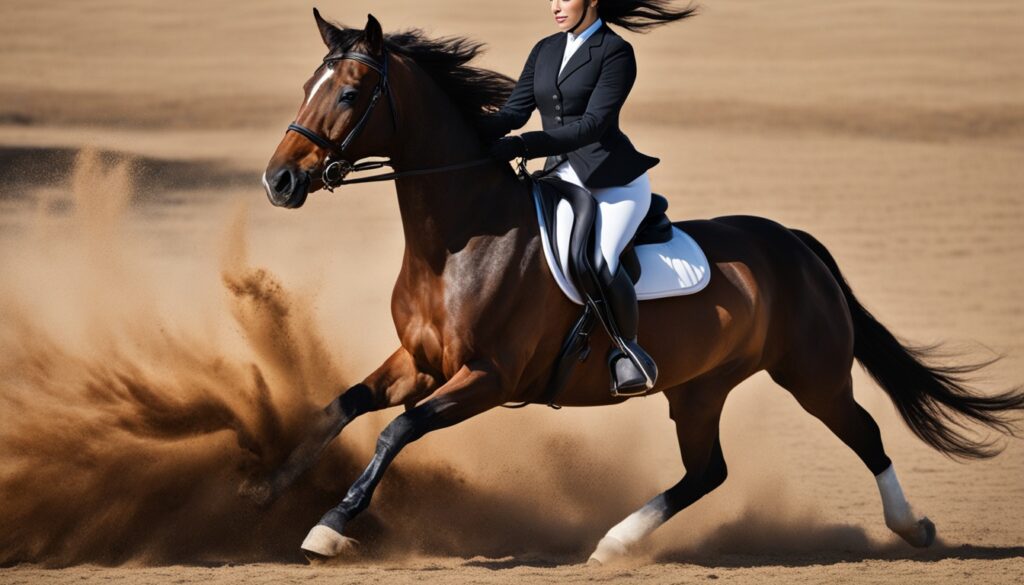
By integrating a comprehensive Equestrian Training approach, incorporating both physical and mental exercises, you can develop the skills and confidence needed to master the canter and truly enjoy the ride.
Balanced Horseback Riding: The Key to Smooth Cantering
Achieving a smooth and controlled canter begins with balanced horseback riding. At the heart of this skill lies the ability to engage your core and maintain a secure position in the saddle. These fundamental elements work in tandem to create the foundation for a confident and comfortable canter.
Engaging Your Core
Proper core engagement is crucial for balanced horseback riding. By activating your abdominal muscles, you can stabilize your upper body and improve your overall balance. This, in turn, allows you to move in sync with the horse’s natural rhythm and respond to its movements with greater ease.
Maintaining a Secure Position
Alongside core engagement, maintaining a secure position in the canter seat is essential for smooth cantering. By keeping a firm, yet relaxed grip with your legs and a stable upper body, you can enhance your control and confidence in the saddle. This stability enables you to absorb the horse’s motion and make subtle adjustments as needed.
By mastering the art of balanced horseback riding, you’ll unlock the key to a smooth and controlled canter. Through consistent practice and a focused approach to core engagement and position, you’ll develop the foundation for a truly seamless and enjoyable riding experience.
Canter Seat Exercises for Better Control
Achieving a smooth and balanced canter requires more than just leg cues and timing. Developing the right muscle memory and posture through targeted exercises can significantly improve your control and command of the canter. In this section, we’ll explore a variety of Canter Seat Exercises that can help you refine your equitation for better Balanced Horseback Riding.
One of the most important aspects of a solid canter seat is maintaining a strong, engaged core. Try this exercise: Sit deep in the saddle, engage your abdominal muscles, and gently squeeze your thighs to stay centered as you canter around the arena. Focus on keeping your upper body still and your eyes up, rather than looking down at your horse’s movements.
- For leg stability, practice canter transitions while keeping your heels firmly down and your calves wrapped around the horse’s barrel. This will help you develop the muscle memory to stay balanced through the gait changes.
- To improve your upper body position, try canter-to-halt transitions, focusing on keeping your shoulders back and your chest open as you slow the pace.
- Incorporate Canter Seat Exercises like two-point position canters, where you rise up out of the saddle while maintaining a deep, secure seat. This challenges your core and leg strength.
Consistent practice of these targeted exercises will help you develop the muscle memory and body control needed for a seamless, Balanced Horseback Riding experience at the canter.
Finding the Canter Rhythm
Mastering the canter rhythm is the key to achieving a smooth and controlled canter. This three-beat gait requires a deep understanding of the horse’s movement and your own body’s coordination. By focusing on the canter rhythm, you can develop the ability to maintain a consistent and balanced canter throughout your ride.
Mastering Canter Transitions
Seamless canter transitions are essential for a harmonious and smooth cantering experience. To master these transitions, practice the following techniques:
- Gradual Acceleration: Gradually increase your horse’s tempo from the trot to the canter rhythm, allowing your horse to find a balanced and even rhythm.
- Subtle Aids: Use subtle leg, seat, and rein aids to cue your horse into the canter transitions, avoiding abrupt or heavy-handed movements.
- Maintain Rhythm: Focus on maintaining the consistent canter rhythm throughout the transition, both when initiating and ending the canter.
By mastering the canter rhythm and canter transitions, you’ll be able to enjoy a smooth cantering experience that is both controlled and responsive to your aids. With practice and patience, you’ll develop the skills necessary to navigate the canter with confidence and grace.
Effective Cantering Techniques for Seamless Lead Changes
Executing smooth, seamless lead changes is a hallmark of an accomplished equestrian. Mastering the art of Canter Lead Changes and Effective Cantering Techniques can elevate your riding to new heights, ensuring a polished and responsive canter.
One of the keys to achieving seamless lead changes is maintaining a balanced, centered seat. This allows you to better feel and respond to your horse’s movements, making the transition between leads effortless. By engaging your core and maintaining a secure position, you’ll be able to guide your horse through the lead change with precision and confidence.
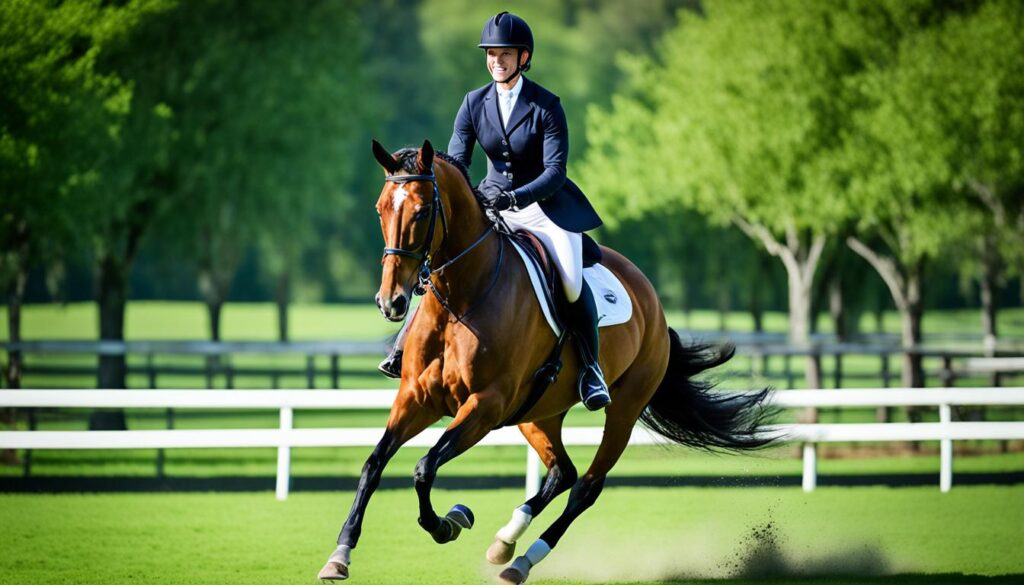
Another important aspect is understanding the canter rhythm. Recognizing the distinct three-beat pattern of the canter will help you time your aids and transition smoothly between leads. Practice feeling the rhythm and adjusting your body to match it, ensuring a harmonious partnership with your horse.
Effective cantering techniques, such as maintaining a consistent tempo and adjusting your weight distribution, can also contribute to smooth lead changes. By staying focused and responsive to your horse’s movements, you’ll be able to anticipate the lead change and execute it with grace and finesse.
Remember, building confidence and celebrating small victories along the way is just as important as mastering the technical aspects of lead changes. With dedication and a positive mindset, you’ll be well on your way to achieving seamless Canter Lead Changes and elevating your overall riding skills.
Building Confidence in the Canter
Developing confidence in the canter is a crucial step for both horse and rider. Mastering the Confidence in the Canter and maintaining Balanced Horseback Riding can be a challenging, yet rewarding journey. In this section, we’ll explore strategies for overcoming common fears and doubts, as well as the importance of celebrating small victories along the way.
Overcoming Fears and Doubts
Fear and self-doubt can be significant barriers to achieving a confident and reliable canter. Many riders struggle with apprehension about the speed and power of the canter, or worry about losing control. To overcome these obstacles, it’s essential to recognize and address the root causes of your anxiety. Practice relaxation techniques, such as deep breathing, and focus on building a strong, balanced seat that will help you feel secure in the saddle.
Celebrating Small Victories
Embarking on the path to Confidence in the Canter is a journey, not a destination. Along the way, it’s crucial to celebrate even the smallest of victories. Whether it’s maintaining a steady rhythm, transitioning smoothly into the canter, or simply feeling more in sync with your horse, acknowledge these achievements and use them as motivation to continue improving. Remember, every step forward, no matter how small, is a step towards a more confident and Balanced Horseback Riding experience.
By addressing your fears, developing a balanced seat, and embracing the progress you make, you can cultivate the confidence and resilience necessary to master the canter. With patience, persistence, and a positive mindset, you’ll be well on your way to a smooth and reliable Confidence in the Canter.
The Art of Smooth Cantering
Mastering the art of smooth cantering is the culmination of all the techniques and skills covered in this guide. It requires consistent practice, unwavering patience, and a holistic approach to refining your effective cantering techniques. By integrating the principles of Smooth Cantering and Effective Cantering Techniques, you can achieve a truly controlled and harmonious canter that showcases your equestrian expertise.
Smooth Cantering is not just about maintaining the perfect rhythm and tempo; it’s about establishing a seamless connection between horse and rider. Through dedicated training, you’ll learn to anticipate your horse’s movements, adjust your body in sync, and foster a sense of mutual trust and responsiveness. This level of coordination is the hallmark of a skilled equestrian, allowing you to navigate the canter with grace and confidence.
Effective Cantering Techniques, such as maintaining a balanced seat, engaging your core, and mastering canter transitions, lay the foundation for a smooth canter. By continuing to refine these skills, you’ll develop a deeper understanding of your horse’s biomechanics and your own body’s role in the canter. This holistic approach to equestrian training will enable you to tackle any challenge on the riding arena with poise and control.
FAQ
What are the key elements for achieving a smooth and controlled canter?
The key elements for a smooth and controlled canter include developing a balanced seat, mastering the canter rhythm, executing seamless transitions and lead changes, and building confidence in the saddle.
How can I improve my canter seat and maintain a secure position?
Engaging your core, keeping your upper body still, and using your legs effectively are crucial for a balanced canter seat. Specific exercises that focus on strengthening your core and improving your stability in the saddle can help you maintain a secure position at the canter.
What are some exercises to help me find and maintain the canter rhythm?
Practicing canter transitions, counting the three-beat rhythm, and using exercises like the “canter circle” can help you become in sync with the natural rhythm of the canter. Mastering the canter rhythm is essential for a smooth and balanced ride.
How can I build confidence and overcome fears when cantering?
Building confidence in the canter takes time and patience. Start with small victories, celebrate your progress, and work with an experienced trainer to address any doubts or fears. Focusing on your balanced position and the horse’s responsiveness can help you feel more in control and confident at the canter.
What are the key techniques for executing clean, seamless lead changes?
Effective lead change techniques involve proper timing, a balanced seat, and clear aids. Practicing transitions, leg-yielding, and targeted exercises can help you develop the necessary skills for executing smooth, confident lead changes.
How can I develop a more consistent and controlled canter?
Consistency and control in the canter come from a combination of techniques, including developing a balanced seat, maintaining the correct rhythm, and practicing canter transitions and lead changes. Regular training and a holistic approach to equestrian skills will help you refine your effective cantering techniques over time.

I’m Fredson Smith, a dedicated researcher at Dincards, passionate about exploring and sharing the diverse world of equines with our readers.