
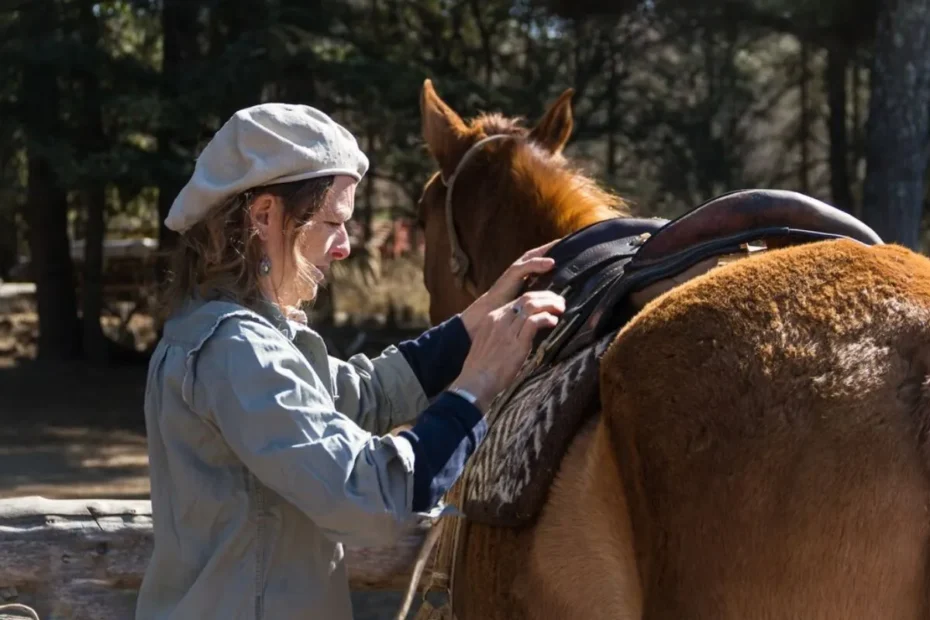
In the world of equestrian sports, the art of communication between horse and rider is paramount. Effective use of riding aids, such as leg, rein, and seat cues, is the key to unlocking a harmonious partnership and achieving success in the saddle.
This article explores the nuances of utilizing these essential tools to convey your intentions clearly to your equine partner, fostering a deeper understanding and seamless collaboration.
Key Takeaways
- Understand the different types of riding aids and their specific purposes
- Learn how to apply leg, rein, and seat aids effectively to control speed, direction, and movement
- Discover the importance of clear communication and coordination between multiple aids
- Develop the skills to build a strong partnership with your horse through consistent use of aids
- Refine your equitation skills to navigate advanced maneuvers with precision
Understanding Riding Aids
As equestrians, understanding the different types of riding aids – Leg Aids, Rein Aids, and Seat Aids – is crucial for developing effective communication with our horses.
These aids serve as the essential building blocks for Dressage Aids and Equitation Skills, allowing us to guide, control, and refine our horses’ movements.
Types of Riding Aids
Leg Aids are used to control the horse’s speed and direction, asking the horse to move forward, sideways, or halt. Rein Aids, on the other hand, are used to guide and shape the horse’s movement, influencing the head, neck, and overall body position. Lastly, Seat Aids play a critical role in maintaining the horse’s balance, rhythm, and responsiveness.
The Importance of Clear Communication
Effective use of these riding aids is essential for establishing clear communication between the horse and rider. When used correctly and in harmony, these aids allow us to convey our intentions clearly, leading to a more responsive and cooperative partnership. Conversely, inconsistent or unclear use of the aids can result in confusion, resistance, and a breakdown in the horse-rider relationship.
By understanding the nuances of each type of aid and practicing their seamless integration, equestrians can develop the skills necessary to ride with precision, elegance, and a deep connection with their equine partners.
Leg Aids: Controlling Speed and Direction
As riders, we rely on a variety of cues to communicate with our equine partners. Among the most important of these are the Leg Aids. These subtle yet powerful riding techniques allow us to control the horse’s speed and direction with precision.
Properly applied Leg Aids are the cornerstone of Horse Training Techniques. By understanding how to effectively use our legs, we can guide our horses through a wide range of Riding Cues, from subtle adjustments to dramatic maneuvers.
- Leg Pressure: Applying gentle pressure with the calves and thighs to encourage forward motion and maintain rhythm.
- Leg Yielding: Applying subtle leg pressure to guide the horse’s hindquarters sideways, enabling lateral movements.
- Leg Cues: Using the legs to direct the horse’s body, signaling changes in speed, direction, and collection.
By mastering the art of Leg Aids, riders can develop a deeper connection with their horses, navigating the arena or trail with confidence and precision. This essential skill lies at the heart of Horse Training Techniques, empowering us to communicate clearly and effectively with our equine partners.
Rein Aids: Guiding and Shaping Movement
In the world of equestrian sports, rein aids play a crucial role in guiding and shaping your horse’s movements. Mastering the art of using rein aids effectively is essential for any rider looking to improve their Equitation Skills and establish clear communication with their equine partner.
Using Rein Aids Effectively
Proper use of rein aids involves a delicate balance of pressure, timing, and responsiveness. Riders must learn to employ subtle adjustments to the reins, applying just the right amount of pressure to elicit the desired response from their horse. This includes using direct and indirect rein aids to control the horse’s speed, direction, and collection.
Common Rein Aid Mistakes to Avoid
While rein aids are a fundamental component of Riding Cues, it’s easy for riders to develop bad habits or make common mistakes. Some of the most prevalent issues include:
- Excessive or inconsistent rein pressure, which can lead to confusion and resistance from the horse.
- Incorrect timing or coordination of rein aids with other aids, resulting in mixed signals.
- Relying too heavily on rein aids and neglecting the importance of leg and seat aids, hindering the horse’s natural balance and responsiveness.
By identifying and addressing these common rein aid mistakes, riders can improve their communication with their horses and develop a more harmonious partnership.
Remember, the key to using rein aids effectively lies in developing a deep understanding of your horse’s responses and continuously refining your Equitation Skills.
With practice and patience, you can master the art of guiding and shaping your horse’s movements to achieve your desired performance goals.
Seat Aids: Maintaining Balance and Rhythm
In the world of equestrian riding, the rider’s seat plays a crucial role in communicating with the horse and maintaining the perfect balance and rhythm. Seat Aids, a fundamental aspect of Dressage Aids, are the subtle movements and adjustments made by the rider’s seat to guide the horse through various maneuvers.
These Seat Aids are particularly vital in the realm of dressage, where the rider’s ability to use their seat effectively is essential for achieving advanced movements and collection.
The Role of Seat Aids in Dressage
Dressage, often referred to as the “ballet of the horse,” is a discipline that requires the rider to have exceptional Equitation Skills. The rider’s seat is the primary means of communicating with the horse, and the ability to use Seat Aids effectively is the foundation for successful dressage performances. From maintaining the horse’s balance and rhythm to cueing subtle transitions, the rider’s seat is the key to unlocking the horse’s potential and achieving the desired level of collection and refinement.
By using precise Seat Aids, the rider can influence the horse’s movement, speed, and direction, all while maintaining a seamless and harmonious partnership. The rider’s ability to shift their weight, adjust their posture, and engage their core muscles directly impacts the horse’s response, making Seat Aids a critical component of the dressage rider’s arsenal.
As riders progress in their Equitation Skills, the use of Seat Aids becomes increasingly refined and nuanced. Mastering the art of Seat Aids not only enhances the rider’s communication with the horse but also allows for the execution of advanced dressage movements with precision and grace.
Effective Use of Riding Aids
Mastering the Effective Use of Riding Aids is crucial for any equestrian aspiring to communicate clearly with their horse. By understanding the nuances of Equestrian Communication and applying Horse Training Techniques effectively, riders can develop a harmonious partnership with their equine companions.
The key to the Effective Use of Riding Aids lies in the careful coordination of leg, rein, and seat aids. Riders must learn to apply these aids with precision, timing, and subtlety, ensuring their messages are received and understood by the horse.
- Timing is Essential: Riders must develop a keen sense of timing, applying aids at the right moment to elicit the desired response from the horse.
- Consistency is Key: Maintaining consistent use of aids helps the horse understand and respond to the rider’s requests more effectively.
- Subtlety Matters: The most skilled riders use the lightest possible aids, relying on subtle cues to communicate with their horses.
By mastering the Effective Use of Riding Aids, riders can unlock the true potential of their Equestrian Communication and enhance their Horse Training Techniques. This harmonious partnership, built on clear and consistent communication, is the foundation for successful equestrian pursuits.
Remember, the Effective Use of Riding Aids is a journey of continuous learning and refinement. Riders who embrace this challenge and strive to improve their communication skills will be rewarded with a deeper connection and greater success with their equine partners.
Combining Aids for Clear Communication
As equestrian enthusiasts, we know that effective communication is the cornerstone of a strong partnership between rider and horse. When it comes to Equestrian Communication, the ability to coordinate multiple riding aids is a true art form.
By mastering Horse Training Techniques like the strategic use of Riding Cues, riders can deliver clear and precise instructions to their equine companions.
Coordinating Multiple Aids
Navigating the intricate dance of leg, rein, and seat aids requires a keen understanding of how each element works in harmony. By applying these aids in a synchronized manner, riders can guide their horses with clarity and confidence. Let’s explore the power of coordinating multiple riding aids:
- Leg Aids and Rein Aids: The combination of subtle leg pressure and responsive rein adjustments allows riders to steer their horses with precision, encouraging the desired speed and direction.
- Seat Aids and Leg Aids: Integrating subtle shifts in the rider’s seat with the application of leg aids can enhance the horse’s balance, rhythm, and responsiveness.
- Rein Aids and Seat Aids: By coordinating rein cues with strategic adjustments in the rider’s posture and balance, horse and rider can seamlessly execute complex maneuvers.
The key to effective Equestrian Communication lies in the rider’s ability to blend these aids harmoniously, creating a language that the horse can understand and respond to with ease.
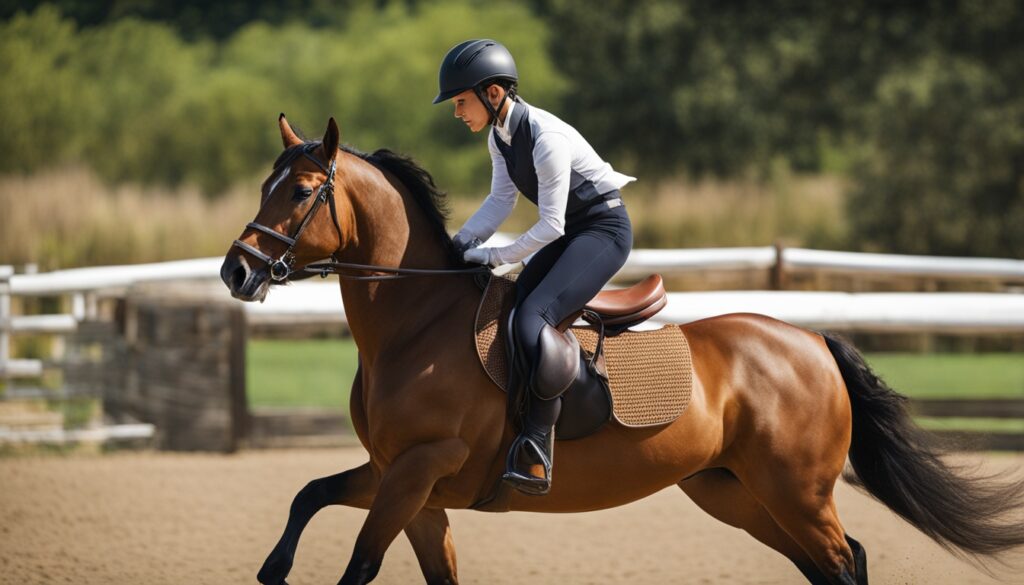
Remember, the art of combining riding aids is a journey of practice and refinement. With patience, dedication, and a deep understanding of Horse Training Techniques, riders can unlock the true potential of their equine partnerships.
Building a Partnership with Your Horse
Developing a strong Horse-Human Partnership is essential for successful equitation. To foster this partnership, it’s crucial to understand your horse’s unique personality and adapt your Equestrian Communication accordingly.
By recognizing and catering to your horse’s individual needs, you can create a harmonious and responsive relationship, laying the foundation for exceptional Equitation Skills.
Understanding Your Horse’s Personality
Every horse is an individual with its own temperament, preferences, and quirks. Some horses are bold and confident, while others may be more sensitive and cautious. Some thrive on interaction and affection, while others prefer a more aloof approach. By observing your horse’s behavior and reactions, you can gain valuable insights into their personality and tailor your training methods to suit their needs.
- Identify your horse’s unique personality traits, such as their level of confidence, sensitivity, and sociability.
- Observe how your horse responds to different situations, stimuli, and interactions with you.
- Adjust your Equestrian Communication and use of riding aids to cater to your horse’s preferences and comfort level.
By understanding and respecting your horse’s personality, you can build a foundation of trust and mutual understanding, leading to a more harmonious and responsive Horse-Human Partnership. This, in turn, will enhance your overall Equitation Skills and the joy of riding.
Developing Equitation Skills
Mastering the art of equitation, or proper riding technique, is essential for any equestrian who aspires to communicate effectively with their horse. By refining your body position, balance, and proprioception, you can enhance your Equitation Skills and become a more intuitive and responsive rider.
Developing strong Equitation Skills goes beyond simply sitting atop a horse. It involves a deep understanding of the interplay between your body and the horse’s movements. Through consistent practice and mindful body awareness, you can learn to use subtle Riding Cues to guide your horse’s pace, direction, and responsiveness.
- Achieve a Balanced Seat: Proper alignment and weight distribution are crucial for maintaining control and stability in the saddle.
- Refine Your Leg Position: Develop a secure, independent leg to deliver precise Equestrian Communication through your lower body.
- Cultivate Core Strength: A strong, engaged core empowers you to move fluidly with the horse and respond to its movements.
- Enhance Body Awareness: Heighten your proprioception to feel the subtlest shifts in your horse’s balance and behavior.
- Master Subtle Cues: Learn to use delicate hand, leg, and seat aids to convey your intentions with clarity and sensitivity.
By prioritizing the development of your Equitation Skills, you’ll forge a deeper, more harmonious partnership with your equine companion. This foundation of skilled horsemanship will empower you to communicate more effectively, navigate complex maneuvers, and enjoy a rewarding, enriching equestrian experience.
Refining Aids for Advanced Maneuvers
As riders progress in their equestrian journey, mastering the art of Dressage Aids becomes crucial for executing more complex maneuvers. In this section, we’ll explore how to refine your use of leg, rein, and seat aids to achieve greater control and precision, particularly when it comes to lateral work and collection.
Lateral Work and Collection
Lateral movements, such as shoulder-in, travers, and half-pass, require a deeper understanding of Equitation Skills and refined Horse Training Techniques. Riders must learn to apply their aids with increased subtlety, coordinating leg, rein, and seat to guide the horse’s movement sideways while maintaining balance and rhythm.
Collection, on the other hand, demands even greater refinement of the aids. Riders must use their leg and seat aids to engage the hindquarters, while the rein aids gently shape the horse’s frame, encouraging a more uphill balance and elevated movement.
- Develop a feel for the horse’s responses to subtle changes in leg and seat aids.
- Practice using the rein aids with a light, steady contact to guide and shape the horse’s movement.
- Experiment with different degrees of collection, gradually increasing the engagement of the hindquarters.
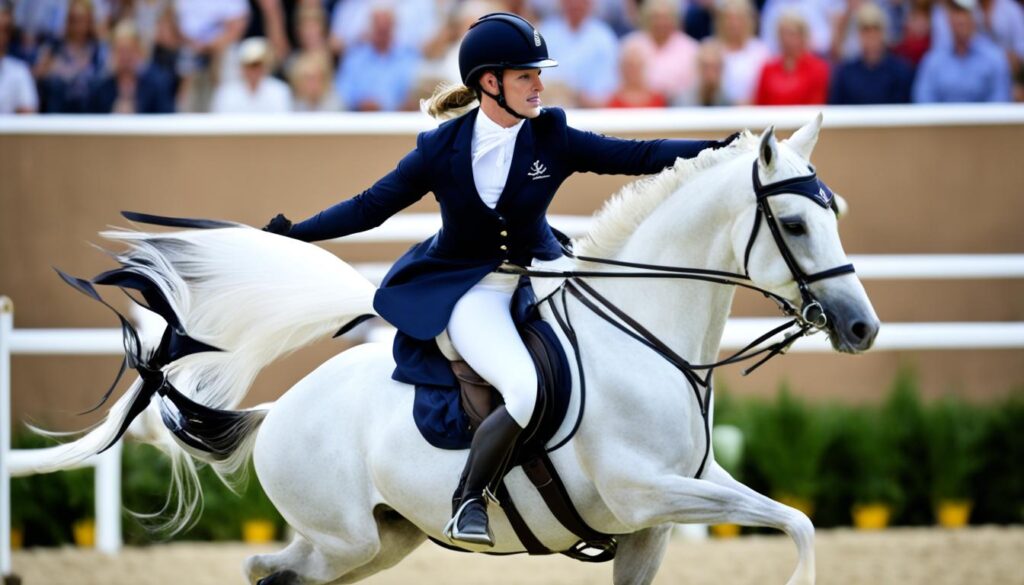
By mastering the art of Dressage Aids, riders can unlock the full potential of their horses, navigating advanced maneuvers with grace and precision. The journey of refining one’s aids is an ongoing process, but the rewards of a seamless partnership with your horse are well worth the effort.
Common Riding Aid Challenges
As equestrians, we strive for seamless Equestrian Communication with our equine partners. However, navigating the nuances of Horse Training Techniques can sometimes present unique challenges. One common issue riders face is encountering resistance or miscommunication when using Riding Cues.
Addressing Resistance and Miscommunication
Resistance from a horse can manifest in various ways, from refusing to respond to aids to developing unwanted behaviors. To address this, it’s crucial to take a step back and evaluate the root cause. Is the horse genuinely resisting, or is there a lack of clear communication and understanding? Carefully assessing the situation and adjusting your approach can make all the difference.
- Ensure Proper Cueing: Revisit the fundamentals of applying Riding Cues effectively. Are you using the correct aids at the right time and with the appropriate intensity? Inconsistency or incorrect application can lead to confusion and resistance.
- Evaluate Horse’s Fitness and Comfort: Consider whether physical discomfort or stress may be contributing to the horse’s reluctance to respond. Addressing any underlying issues can help establish a more receptive mindset.
- Foster a Positive Learning Environment: Approach training sessions with patience, positivity, and a focus on rewarding desired behaviors. Harsh or punitive measures are more likely to exacerbate resistance than resolve it.
By addressing resistance and maintaining clear, consistent Equestrian Communication, riders can build a strong partnership with their equine companions and overcome common challenges. With dedication and a willingness to adapt, you can unlock the true potential of your horse-rider team.
Consistency: The Key to Effective Communication
Achieving clear and effective communication with your horse is a fundamental aspect of the Effective Use of Riding Aids. One of the critical elements in this process is maintaining a consistent approach to using your leg, rein, and seat aids. Consistency not only helps your horse understand your requests but also fosters a strong, responsive partnership between you and your equine partner.
Equestrian Communication is built upon the foundation of clearly and consistently applying your aids. When you approach every ride with the same level of precision and discipline, your horse learns to trust your cues and respond accordingly. This consistent language allows you to effectively guide your horse through a variety of maneuvers, from simple transitions to complex lateral work.
The Horse-Human Partnership thrives on mutual understanding and trust. By developing a consistent routine of applying your aids, you demonstrate to your horse that you are a reliable leader, ultimately strengthening the bond between you.
This consistency also helps you identify and address any issues or miscommunications that may arise, allowing you to refine your techniques and continue progressing in your riding skills.
FAQ
What are the different types of riding aids?
The main types of riding aids are leg aids, rein aids, and seat aids. Leg aids are used to control the horse’s speed and direction, rein aids are used for guiding and shaping the horse’s movements, and seat aids are crucial for maintaining balance and rhythm.
Why is clear communication between horse and rider important?
Clear communication is essential for developing a harmonious partnership between horse and rider. Effective use of riding aids allows the rider to convey their intentions clearly to the horse, enabling better training, performance, and overall well-being of the horse-rider team.
How can leg aids be used to control the horse’s speed and direction?
Leg aids are used to influence the horse’s speed and direction. By applying subtle pressure with the legs, riders can ask the horse to move forward, slow down, or change direction. Proper use of leg aids is crucial for training and achieving the desired response from the horse.
What is the role of rein aids in guiding and shaping the horse’s movements?
Rein aids are used to guide and shape the horse’s movements. Riders can use rein aids to steer the horse, collect or extend their gaits, and influence the horse’s head and neck position. Understanding how to use rein aids effectively is essential for achieving precise and responsive movements from the horse.
How do seat aids contribute to maintaining balance and rhythm?
Seat aids play a vital role in maintaining the horse’s balance and rhythm. By using their seat effectively, riders can influence the horse’s balance, impulsion, and cadence. In dressage, the rider’s seat aids are particularly important for achieving advanced movements and collection.
What are some common mistakes to avoid when using rein aids?
Some common mistakes to avoid when using rein aids include pulling too hard or constantly, creating uneven contact, and using the reins for balance. Riders should aim for a soft, consistent contact and use rein aids in coordination with other riding aids to communicate effectively with their horse.

I’m Fredson Smith, a dedicated researcher at Dincards, passionate about exploring and sharing the diverse world of equines with our readers.