
Achieving the perfect riding posture is a crucial aspect of equestrian success, as it directly impacts your balance, control, and overall harmony with your horse.
Whether you’re a seasoned rider or just starting your journey, mastering the proper equestrian stance can unlock new levels of performance and confidence in the saddle.
In this comprehensive guide, we’ll explore effective techniques for improving your riding posture, from understanding the importance of a balanced riding position to developing the core strength and muscle memory needed to maintain a confident, relaxed, and engaged stance.
By aligning your body and embracing the principles of proper biomechanics, you’ll discover how to enhance your communication with your horse and take your riding to new heights.
Key Takeaways
- Understand the importance of proper riding posture for balance, control, and horse-rider harmony.
- Learn how to enhance your core strength and muscle memory for a more stable and confident stance.
- Discover techniques to align your body and adjust your position for different riding disciplines.
- Explore the benefits of a balanced riding position, including improved communication with your horse.
- Cultivate a relaxed yet engaged posture that promotes a seamless partnership with your equine partner.
The Importance of Proper Riding Posture
Proper riding posture is the foundation for a harmonious connection between horse and rider. By aligning your body in the saddle, you can enhance communication, improve balance, and avoid discomfort or injuries during your riding sessions.
Enhancing Horse-Rider Harmony
When you maintain a well-balanced, ergonomic riding position, you and your horse can work together seamlessly. Your horse will be able to better respond to subtle cues and aids, as your body will be aligned to transmit these signals effectively.
This horse-rider harmony is essential for achieving the desired performance and building a strong partnership with your equine partner.
Avoiding Injuries and Discomfort
- Proper riding posture helps to distribute your weight evenly, reducing strain on your joints and muscles.
- An aligned body position minimizes the risk of riding injuries, such as back pain, knee problems, and other musculoskeletal issues.
- Comfortable rider comfort allows you to focus on your horse’s needs and the task at hand, rather than being distracted by physical discomfort.
By prioritizing proper riding posture, you can unlock the full potential of your riding experience, fostering a deeper connection with your horse and safeguarding your own well-being on the saddle.
Understanding Riding Biomechanics
As equestrian enthusiasts, we often focus on the external aspects of our riding, such as proper equitation and correct use of the aids. However, delving into the science of riding biomechanics can offer invaluable insights into optimizing our performance in the saddle.
The Role of Core Strength
At the heart of effective riding lies the rider’s core strength. A strong and stable core not only helps maintain a balanced riding position but also enhances the ability to communicate subtle cues to the horse. By engaging the core muscles, riders can achieve better control, improved balance, and a more fluid connection with their equine partner.
Building core strength for riders is essential for several reasons:
- Improved Stability: A strong core provides a solid foundation, allowing the rider to remain centered and poised, even in challenging situations.
- Enhanced Balance: Core strength enables the rider to move in sync with the horse, seamlessly following the horse’s motions and maintaining a balanced riding position.
- Increased Responsiveness: With a strong core, riders can transmit subtle aids and cues more effectively, fostering better communication and cooperation with the horse.
By understanding the role of core strength for riders and incorporating targeted exercises into their training regimen, equestrians can unlock the true potential of their riding biomechanics and achieve a more balanced riding position.
Aligning Your Body for Balanced Riding
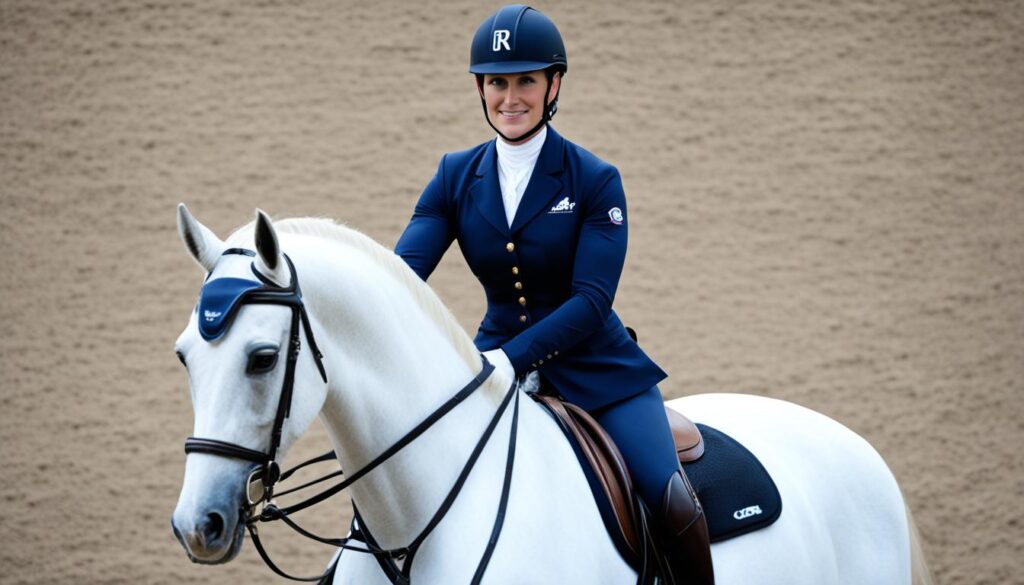
Achieving a balanced riding position is crucial for both you and your horse’s well-being. By aligning your rider’s body alignment properly, you can establish a confident horseback posture that enhances communication and control with your equine partner.
Start by focusing on your spine. Maintain a tall, straight posture, keeping your shoulders back and your chin slightly tucked. This alignment helps you remain centered and balanced in the saddle, allowing you to move fluidly with the horse’s movements.
- Engage your core muscles to provide a stable foundation for your upper body.
- Gently rotate your hips forward, keeping your thighs in a comfortable, slightly angled position.
- Ensure your heels are aligned beneath your hips, with your weight evenly distributed through your feet.
By maintaining this balanced riding position, you’ll feel more grounded and in control, enabling you to communicate your intentions clearly to your horse.
With practice, this rider’s body alignment will become second nature, allowing you to develop a confident horseback posture that benefits both you and your equine partner.
Improving Your Riding Posture
Enhancing your riding posture is a crucial aspect of becoming a skilled equestrian. By focusing on exercises to strengthen your core and developing muscle memory, you can achieve a balanced and confident riding position that will benefit both you and your horse.
Exercises to Strengthen Your Core
A strong core is the foundation for maintaining proper riding posture. Incorporate the following exercises into your routine to build core strength and stability:
- Planks – Hold a plank position, engaging your abdominal muscles, for 30 seconds to one minute.
- Crunches – Perform traditional crunches, focusing on a slow, controlled movement.
- Leg Raises – Lie on your back and raise your legs, keeping them straight, towards the ceiling.
Developing Muscle Memory
Consistent practice is key to developing the muscle memory required for maintaining an improved riding posture. Consider the following techniques to reinforce your new habits:
- Visualize your ideal riding position while off the horse, mentally rehearsing the correct alignment and muscle engagement.
- Incorporate postural adjustments into your daily riding routine, making small corrections until they become second nature.
- Seek feedback from experienced instructors or trainers, who can provide valuable insights and guidance on refining your posture.
By combining core-strengthening exercises and deliberate muscle memory practice, you can take significant strides towards improving your riding posture and becoming a more confident, balanced, and effective equestrian.
Maintaining a Confident Stance
Cultivating a confident stance on horseback involves finding the balance between relaxation and engagement. As riders, we must embrace a relaxed yet engaged riding position that allows us to respond fluidly to our horse’s movements.
By maintaining a confident horseback posture, we can enhance our connection with our equine partners and navigate the riding experience with greater poise and control.
Embracing a Relaxed yet Engaged Position
The key to a confident riding stance lies in striking the right balance between muscle tension and fluidity. Avoid the common pitfalls of being overly rigid or completely limp in the saddle. Instead, strive for a relaxed yet engaged position that enables you to move seamlessly with your horse.
To achieve this, focus on:
- Maintaining a supple, flexible core that acts as the foundation for your movements
- Keeping your shoulders back and your chin up, projecting an air of confidence
- Allowing your hips to move freely, absorbing the rhythm of your horse’s stride
- Maintaining a light, responsive contact with the reins, ready to respond to your horse’s cues
By cultivating this relaxed yet engaged riding position, you’ll not only look the part of a confident equestrian, but you’ll also feel more in sync with your horse, able to anticipate and respond to their movements with ease.
Remember, the essence of a confident riding stance is not about rigidity, but about adaptability. Embrace the fluidity of the moment, and let your body move in harmony with your horse’s natural rhythms. With practice and dedication, you’ll develop the poise and control that define the mark of a skilled rider.
Proper Equestrian Stance
Achieving a proper equestrian stance is crucial for maintaining balance, control, and harmony with your horse. This well-aligned riding position not only enhances your overall riding experience but also helps prevent injuries and discomfort. Let’s explore the key elements that define a proper equestrian stance and how you can cultivate a balanced riding position.
At the foundation of a proper equestrian stance is the alignment of your body. Your shoulders should be back, your chest open, and your head held high. This posture promotes a sense of confidence and control, allowing you to communicate effectively with your horse.
Your hips should be positioned directly over your heels, creating a straight line from your shoulder through your hip and down to your heel.
- Maintain a relaxed, yet engaged, grip on the reins, allowing for subtle cues and responsive communication.
- Keep your legs close to the horse’s sides, with your heels slightly behind the girth, providing a stable foundation.
- Engage your core muscles to maintain a balanced and secure position, absorbing the movement of the horse.
By embracing this proper equestrian stance, you’ll experience enhanced balance, improved communication with your horse, and a more enjoyable and comfortable riding experience.
Remember, consistent practice and mindful attention to your body positioning are key to developing and maintaining a balanced riding position.
Adjusting Your Position for Different Riding Disciplines
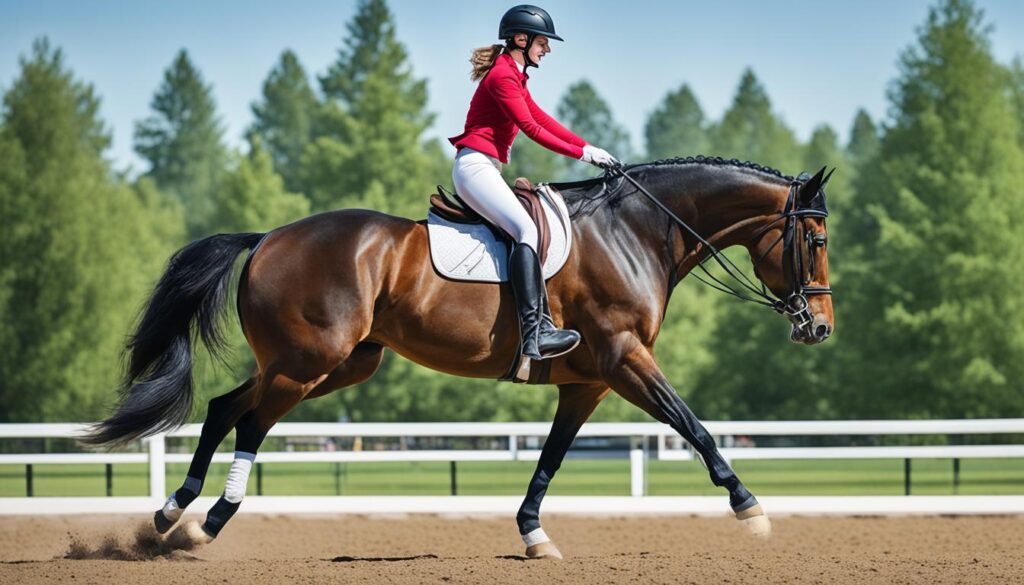
While the fundamentals of proper adjusting riding posture remain consistent across equestrian disciplines, certain adjustments may be necessary to excel in specific riding styles. Understanding the nuances of adapting your dressage posture and hunter/jumper posture can help you develop a more versatile and effective riding technique.
Dressage Variations
In the elegant sport of dressage, your posture should reflect a sense of balance, control, and subtlety. Maintain a slightly deeper seat with your weight distributed evenly through your legs. Keep your upper body relaxed yet upright, allowing your shoulders to remain square and your head positioned high.
This positioning enables you to communicate seamlessly with your horse through the slightest shifts in your body.
Hunter/Jumper Adjustments
For the dynamic disciplines of hunter/jumper, your adjusting riding posture will need to adapt to the increased demands of speed and agility. Adopt a slightly more forward-leaning position, with your weight centered over your stirrups.
This will help you maintain balance and stability as you navigate over fences and navigate tight turns. Remember to keep your heels down and your upper body fluid, allowing your horse to move freely beneath you.
By understanding the unique postural requirements of different riding disciplines, you can refine your technique and elevate your performance in the saddle. Whether you’re perfecting your dressage posture or honing your hunter/jumper posture, the key is to maintain a balanced and adaptable riding position that allows you to communicate seamlessly with your equine partner.
The Benefits of a Balanced Riding Position
Mastering a balanced riding position unlocks a wealth of benefits that can transform your equestrian journey. At the heart of this is the ability to enhance your communication with your horse, fostering a deeper level of partnership and performance.
Enhancing Communication with Your Horse
When your body is properly aligned and your weight is evenly distributed, you can more effectively interpret and respond to your horse’s subtle cues. This heightened awareness allows you to anticipate your horse’s movements, making timely adjustments that keep you both in sync.
The result is a harmonious partnership where the horse can trust your guidance and you can confidently navigate any riding challenge.
Beyond just improved communication, a balanced riding position also promotes a sense of security and trust between you and your equine partner. Your horse can feel your stability and confidence, which in turn helps them relax and perform to their full potential. This mutual understanding and respect is the foundation for exceptional horsemanship.
FAQ
What are the key elements of proper equestrian stance?
Proper equestrian stance involves aligning your body from head to toe, including maintaining a straight spine, relaxed shoulders, engaged core, and balanced weight distribution through your legs and heels.
How does a balanced riding position improve communication with my horse?
A balanced riding position allows you to be more in tune with your horse’s movements and cues, enabling you to respond with subtle, refined aids that enhance the overall harmony between you and your equine partner.
What are some exercises to strengthen my core for better riding posture?
Effective core-strengthening exercises for riders include planks, bridges, and exercises that engage the abdominal and back muscles. Incorporating these into your routine can significantly improve your stability and balance in the saddle.
How can I adjust my riding posture for different disciplines, such as dressage and hunter/jumper?
While the fundamentals of proper riding posture remain the same, certain adjustments may be necessary for different disciplines. For example, dressage may require a slightly more upright position, while hunter/jumper may involve a slightly more forward-inclined stance to accommodate the jumping effort.
How can I develop muscle memory for maintaining good riding posture?
Consistent practice and repetition are key to developing muscle memory for proper riding posture. Engage in regular riding sessions, focusing on maintaining your alignment and body position, and be mindful of your posture throughout your rides. Over time, this will become second nature.
What are the benefits of a balanced riding position?
A balanced riding position offers numerous benefits, including enhanced communication with your horse, improved stability and control, reduced risk of injuries, and a greater sense of confidence and partnership in the saddle.

I’m Fredson Smith, a dedicated researcher at Dincards, passionate about exploring and sharing the diverse world of equines with our readers.