
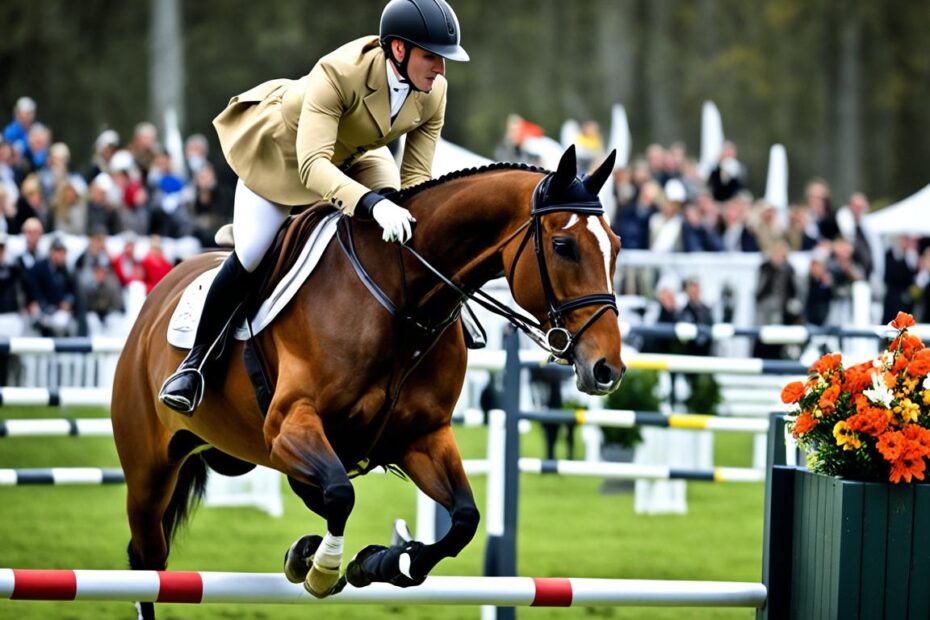
In the captivating world of equestrian sports, the hunter discipline stands out as a testament to the elegance and precision of horse and rider partnerships.
This article takes you on a journey to unravel the intricacies of hunter competitions, delving into the scoring criteria, judging principles, course design requirements, and essential riding techniques that can elevate your performance in the show ring.
Whether you’re a seasoned competitor or new to the hunter discipline, this comprehensive guide will provide you with the insights and strategies needed to excel in this dynamic equestrian event.
Key Takeaways
- Understand the scoring criteria and judging principles that govern hunter competitions.
- Explore the importance of course design and fence requirements in shaping the overall competition.
- Discover the essential equitation skills and riding techniques that can elevate your performance.
- Delve into the prestigious hunter derby and classic events, and learn how to qualify and excel.
- Gain insights into the history and evolution of the hunter discipline, as well as modern training and preparation strategies.
Introduction to Hunter Competitions
The hunter discipline in equestrian sports holds a rich history and plays a significant role in horse show classes. Understanding the history and importance of hunter competitions is crucial for both equestrians and enthusiasts alike. This section provides an overview of the hunter discipline and its place in the equestrian world.
Overview of the Hunter Discipline
The hunter discipline focuses on evaluating a horse’s movement, manners, and overall performance over a series of fences. Originated in the late 19th century, the hunter class was designed to showcase the athleticism and elegance of horse-rider partnerships, mirroring the skills required for fox hunting.
Horses competing in hunter classes are judged on their ability to navigate the course with a smooth, rhythmic stride, while demonstrating obedience, consistency, and a willing attitude.
Importance of Hunter Competitions
Hunter competitions hold a prominent place in the equestrian world, serving as a platform for riders to demonstrate their horsemanship skills and the athleticism of their mounts. These events provide opportunities for horse owners and trainers to showcase their prized animals, with successful performances often leading to increased value and recognition within the hunter discipline history.
Moreover, hunter competitions play a crucial role in the development and refinement of understanding hunter competitions, as riders strive to master the nuances of the sport and elevate their horse show classes.
Understanding Hunter Competitions
Navigating the world of hunter competitions can be an exhilarating yet intricate journey for equestrian enthusiasts. These events, which are a staple of the horse show circuit, offer a unique blend of artistry, precision, and a deep understanding of the equine athlete.
At the heart of these competitions lies a focus on the horse’s movement, manners, and overall performance, rather than solely on the rider’s abilities.
Hunter classes encompass a wide range of categories, each with its own set of requirements and expectations. From green hunter divisions for less experienced horses to the prestigious hunter derbies, these events provide a platform for horses and riders to showcase their skills and grace.
The ultimate goal is to present a seamless and harmonious partnership, where the horse’s natural abilities are highlighted and the rider’s subtle cues blend seamlessly with the animal’s movements.
| Hunter Class Categories | Description |
|---|---|
| Green Hunter | Designed for horses new to the hunter ring, with fences at a lower height. |
| Performance Hunter | Showcases horses with advanced movement and athleticism. |
| Amateur-Owner Hunter | For amateur riders who own their horses, with higher fence heights. |
| Junior Hunter | For riders under the age of 18, with varying fence heights based on age. |
Understanding the nuances of each horse show class is crucial for both riders and spectators to fully appreciate the intricacies of hunter competitions.
By delving into the unique requirements and judging criteria of these events, equestrian enthusiasts can gain a deeper appreciation for the art and skill of this discipline.
Scoring Criteria in Hunter Classes
In the captivating world of hunter competitions, the judging process is a crucial element that determines the success of horse-and-rider partnerships.
The judging criteria applied in these events focus on the overall performance, emphasizing the seamless execution of equitation skills and the harmonious scoring components that create an elegant and polished display.
Judging Principles and Standards
Hunter judges assess a multitude of factors when evaluating the performance in the ring. The primary focus is on the horse’s movement, its way of going, and the rider’s ability to maintain a consistent and effective position throughout the course.
Judges also place a significant emphasis on the horse’s manners, responsiveness, and overall style, which contribute to the overall impression of the partnership.
Scoring Components and Percentages
- Equitation: 30-40% of the total score
- Horse’s Performance: 40-50% of the total score
- Style and Manner: 10-20% of the total score
| Scoring Component | Percentage of Total Score |
|---|---|
| Equitation | 30-40% |
| Horse’s Performance | 40-50% |
| Style and Manner | 10-20% |
These scoring components and their respective percentages provide a comprehensive framework for judges to assess the overall excellence of the horse-and-rider combination, ensuring a fair and objective evaluation of the judging criteria in hunter competitions.
Course Design and Requirements
In the thrilling world of hunter competitions, the course design plays a pivotal role in testing the skills and partnership between horse and rider. Carefully crafted by experienced course designers, the hunter course is a masterpiece of strategic planning, challenging participants to navigate a series of fences that showcase their finesse and precision.
Fence Types and Heights
The hunter course is adorned with a diverse array of fence types, each designed to assess a specific aspect of the horse-rider combination’s abilities. These fences can range from simple vertical posts to more complex oxers and in-and-outs, each presenting its own unique set of challenges.
The height of these fences is also carefully considered, typically ranging from 2’6″ to 3’6″, with the occasional 3’9″ or 4′ fence for more advanced competitors.
The fence heights are intentionally set to challenge the horse’s scope and the rider’s ability to maintain a consistent pace and rhythm throughout the course. This attention to detail ensures that the hunter competition is a true test of the partnership’s versatility, agility, and responsiveness.
- Vertical posts
- Oxers
- In-and-outs
- Fence heights ranging from 2’6″ to 4′
By carefully designing the course and selecting the appropriate fence types and heights, course designers create an environment where horse and rider can showcase their talents and strive for excellence.
This attention to detail is a hallmark of the hunter discipline, ensuring that every competition is a true test of the partnership’s abilities.
Equitation and Riding Techniques
Mastering equitation skills and riding techniques is essential for success in hunter competitions. Proper body position and the use of effective aids can significantly impact a horse-rider’s performance and scoring. In this section, we’ll explore the key elements that contribute to an exceptional hunter competitor.
Proper Position and Effective Aids
Maintaining the correct body position is crucial for maintaining balance, control, and communication with the horse. Riders should strive for a stable, centered seat with a straight, aligned spine and relaxed, supple joints. The hands should hold the reins with a light, steady contact, allowing for subtle adjustments and responsiveness to the horse’s movements.
The use of effective aids, such as leg, seat, and rein aids, is equally important. Riders must learn to apply these aids with precision and timing, ensuring smooth transitions, adjustments in pace, and the ability to guide the horse through the hunter course.
Developing a cohesive partnership between horse and rider is essential for achieving a harmonious and successful performance.
By mastering equitation skills and incorporating effective riding techniques, competitors can showcase their proficiency and earn higher scores in hunter competitions. The combination of a proper position and the skillful use of aids allows riders to navigate the course with confidence, grace, and control, ultimately enhancing their chances of success.
Hunter Derby Events
In the world of hunter competitions, there’s a unique event that captivates equestrians and spectators alike – the hunter derby. These specialized competitions challenge horse-rider partnerships with intricate course designs and heightened difficulty, testing their skills and adaptability.
Hunter derbies are a testament to the elegance and finesse of the hunter discipline. Riders must navigate a course that features a mix of traditional hunter fences, natural obstacles, and even some derby-specific elements, all while maintaining a consistent, flowing rhythm and graceful presentation.
The scoring in a hunter derby event places a greater emphasis on the horse’s overall performance, including its movement, way of going, and ability to adapt to the course’s challenges. Judges carefully evaluate the partnership’s fluency, promptness in responding to the rider’s aids, and the horse’s natural jumping ability and style.
- Unique Course Design: Hunter derbies feature a blend of traditional hunter fences, natural obstacles, and derby-specific elements, testing the horse-rider partnership’s adaptability.
- Emphasis on Performance: Judges focus on the horse’s overall movement, way of going, and ability to navigate the course with grace and precision.
- Heightened Difficulty: Hunter derbies present a greater challenge compared to traditional hunter classes, requiring exceptional riding skills and a well-trained, responsive horse.
For riders who have mastered the fundamentals of the hunter discipline, the hunter derby event represents an opportunity to showcase their partnership’s true potential and compete at the highest level of equestrian competition. These thrilling events are a testament to the beauty and athleticism of the hunter horse and the dedication of their riders.
Hunter Classic Competitions
In the world of equestrian sports, the hunter classic competitions stand out as a true testament to the skill, precision, and grace of both horse and rider.
These prestigious events attract the most accomplished competitors, each vying for the opportunity to showcase their mastery of the hunter discipline.
Prestige and Importance
Hunter classic competitions are widely regarded as the most prestigious and important events in the hunter world. They represent the apex of the sport, where the finest horse-and-rider combinations converge to compete at the highest level.
These competitions are not merely a test of technical prowess; they are a celebration of the harmonious partnership between the equine athlete and the skilled rider.
Qualifying and Participation
Gaining entry into a hunter classic competition is no easy feat. Riders must first qualify by meeting stringent criteria, such as achieving a certain level of success in prior hunter events or maintaining a consistent record of outstanding performances.
The competition for a spot in these prestigious competitions is fierce, with only the most dedicated and talented equestrian athletes earning the right to participate.
Participating in a hunter classic competition is a true honor, as it signifies the culmination of years of hard work, training, and commitment to the sport. The thrill of competing on such a grand stage, in front of esteemed judges and an appreciative audience, is unparalleled.
Each rider strives to create a seamless, flowing performance that captures the essence of the hunter discipline, ultimately vying for the coveted title of champion.
Hunter Breeding Classes
In the world of equestrian competitions, hunter breeding classes hold a special place. These specialized events focus on evaluating the conformation, movement, and overall potential of young horses for the hunter discipline.
The judging criteria and standards used in these classes are designed to identify the horses that possess the qualities essential for a successful hunter career.
Judging Criteria and Standards
The assessment of hunter breeding horses is a meticulous process that takes into account a variety of factors. Judges carefully examine the horse’s conformation, looking for balance, symmetry, and the overall structural integrity that will allow the animal to move with the grace and power required in the hunter ring.
Additionally, the movement of the horse is closely scrutinized, with judges evaluating the horse’s gaits, suppleness, and natural elevation.
Equally important are the breed-specific characteristics that are essential for the hunter discipline. Judges must ensure that the young horses exhibit the correct type, substance, and temperament that will enable them to thrive in the demanding world of hunter competitions.
- Conformation: Balance, symmetry, and structural integrity
- Movement: Gaits, suppleness, and natural elevation
- Breed-specific characteristics: Type, substance, and temperament
By meticulously evaluating these criteria, judges in hunter breeding classes are able to identify the horses with the greatest potential to excel in the hunter ring.
This process ensures that the sport continues to be represented by equine athletes of the highest caliber, paving the way for the next generation of hunter champions.
History of the Hunter Discipline
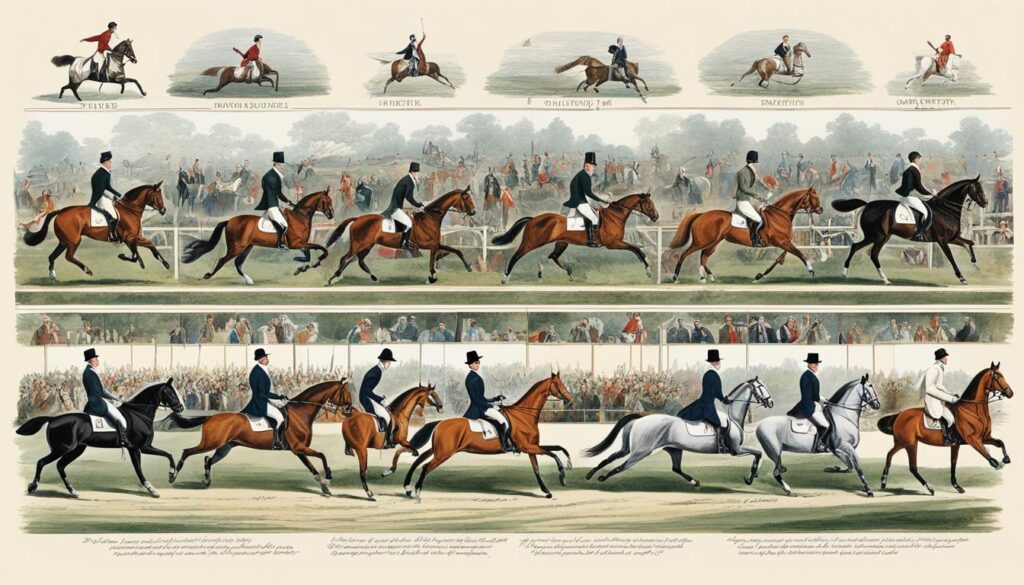
The hunter discipline has a rich and storied past, tracing its origins to the early days of equestrian sport. The hunter discipline history is a testament to the enduring popularity and evolution of this beloved equestrian event.
Origins and Evolution
The roots of the hunter discipline can be found in the hunting practices of the 18th and 19th centuries. As horse-drawn carriages and leisure riding became more common among the aristocracy, the need for well-trained, responsive horses that could navigate rough terrain and obstacles grew.
This led to the development of the hunter discipline, which aimed to showcase the athleticism, grace, and obedience of these remarkable animals.
Over the years, the origins and evolution of the hunter discipline have been shaped by various cultural and equestrian influences. The introduction of formal competitions and the establishment of judging criteria helped to refine and standardize the sport, ensuring that it remained a true test of a horse’s capabilities.
Today, the hunter discipline is recognized as a prestigious and highly competitive event, attracting top-level equestrians and horses from around the world.
| Historical Landmark | Year | Significance |
|---|---|---|
| First Formal Hunter Competitions | 1850s | Established the foundation for modern hunter events |
| Formation of the United States Hunter Jumper Association (USHJA) | 1971 | Standardized rules and regulations for hunter competitions |
| Introduction of the Hunter Derby | 2008 | Revived interest in the traditional style of hunter competition |
The hunter discipline history and its origins and evolution continue to captivate equestrian enthusiasts, who appreciate the grace, elegance, and skill required to excel in this discipline. As the sport continues to evolve, the rich traditions and enduring legacy of the hunter discipline will undoubtedly endure.
Training and Preparation Strategies
Mastering the art of hunter competitions requires a well-rounded training approach that focuses on both the rider’s and the horse’s development. At the heart of this strategy lie the foundational elements of flatwork and gymnastic exercises, which lay the groundwork for a confident and harmonious partnership.
Flatwork and Gymnastic Exercises
Consistent practice of flatwork, such as transitions, lateral movements, and changes of pace, helps to refine the horse’s responsiveness and the rider’s communication. Coupled with thoughtfully designed gymnastic exercises, this training regimen builds the horse’s strength, agility, and confidence over fences.
By incorporating these versatile exercises into their routine, equestrian athletes can fine-tune their technique and prepare for the demands of the hunter ring.
Developing a Confident Partnership
The true essence of hunter success lies in the seamless connection between horse and rider. Through patient and progressive training, athletes can cultivate a partnership built on trust, communication, and a shared understanding of the task at hand.
By nurturing this bond and instilling a sense of confidence in both the horse and rider, competitors can tackle the challenges of the course with poise and elegance, showcasing the true artistry of the hunter discipline.
FAQ
What is the hunter discipline in equestrian competitions?
The hunter discipline in equestrian competitions is a style of riding that emphasizes the horse’s movement, manners, and way of going. Hunters are judged on their ability to safely and smoothly navigate a course of fences, while displaying elegance, consistency, and obedience.
How are hunter classes scored?
In hunter classes, horses are scored on a scale of 0-100 points. Judges evaluate various criteria, including the horse’s gaits, jumping style, and the rider’s equitation (proper riding position and use of aids). The scoring components are typically weighted, with the largest percentage going to the horse’s performance over the fences.
What are the different types of hunter classes?
There are several types of hunter classes, including green hunter (for inexperienced horses), high performance hunter, and amateur-owner hunter (for non-professional riders). Hunter classic and hunter derby events offer additional challenges with more complex course designs.
How is a hunter course designed?
Hunter course designers carefully plan the layout, fence types, and heights to test the horse-rider partnership’s abilities. Courses typically include a variety of obstacles, such as vertical fences, oxers, and inviting natural elements like brush or logs. The course design aims to showcase the horse’s athleticism, obedience, and the rider’s equitation skills.
What are the key factors judges consider in hunter classes?
Judges in hunter classes evaluate several key factors, including the horse’s movement, jumping style, manners, and overall way of going. The rider’s equitation, or proper riding position and effective use of aids, is also a significant component of the scoring. Judges look for a harmonious, flowing partnership between horse and rider.
How can riders improve their performance in hunter competitions?
Riders can improve their performance in hunter competitions by focusing on developing a strong foundation through flatwork and gymnastic exercises, as well as building a confident partnership with their horse. Attention to detail in equitation, such as maintaining a correct body position and using subtle aids, can also significantly contribute to success in the hunter ring.
What are the different types of hunter breeding classes?
Hunter breeding classes focus on evaluating the conformation, movement, and overall potential of young horses for the hunter discipline. Judges assess characteristics like balance, bone quality, and the horse’s ability to move with the desired hunter-type expression and cadence.

I’m Fredson Smith, a dedicated researcher at Dincards, passionate about exploring and sharing the diverse world of equines with our readers.